
2026 Guide to Purchasing and Installing a PBX
From Analog to All-in-One Cloud PBX Solutions
The PBX, also known as telephone exchange, serves as the central communications hub of any company. With technological advancements, the communication system is no longer just a means of making calls, it has become a tool for increasing productivity and reducing costs. In this guide, we review the different types of PBXs and how to choose the optimal one that suits the nature of your business.
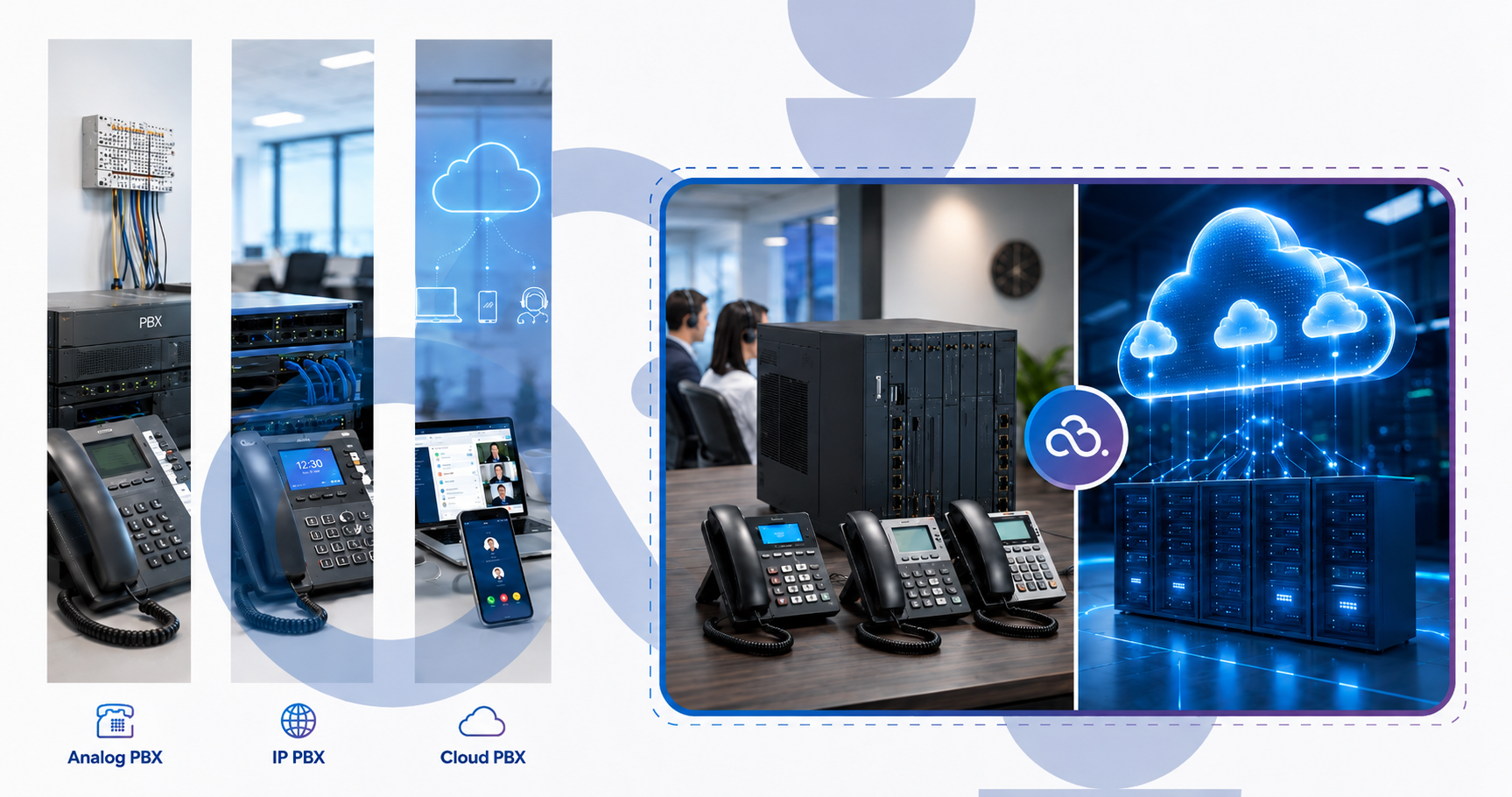
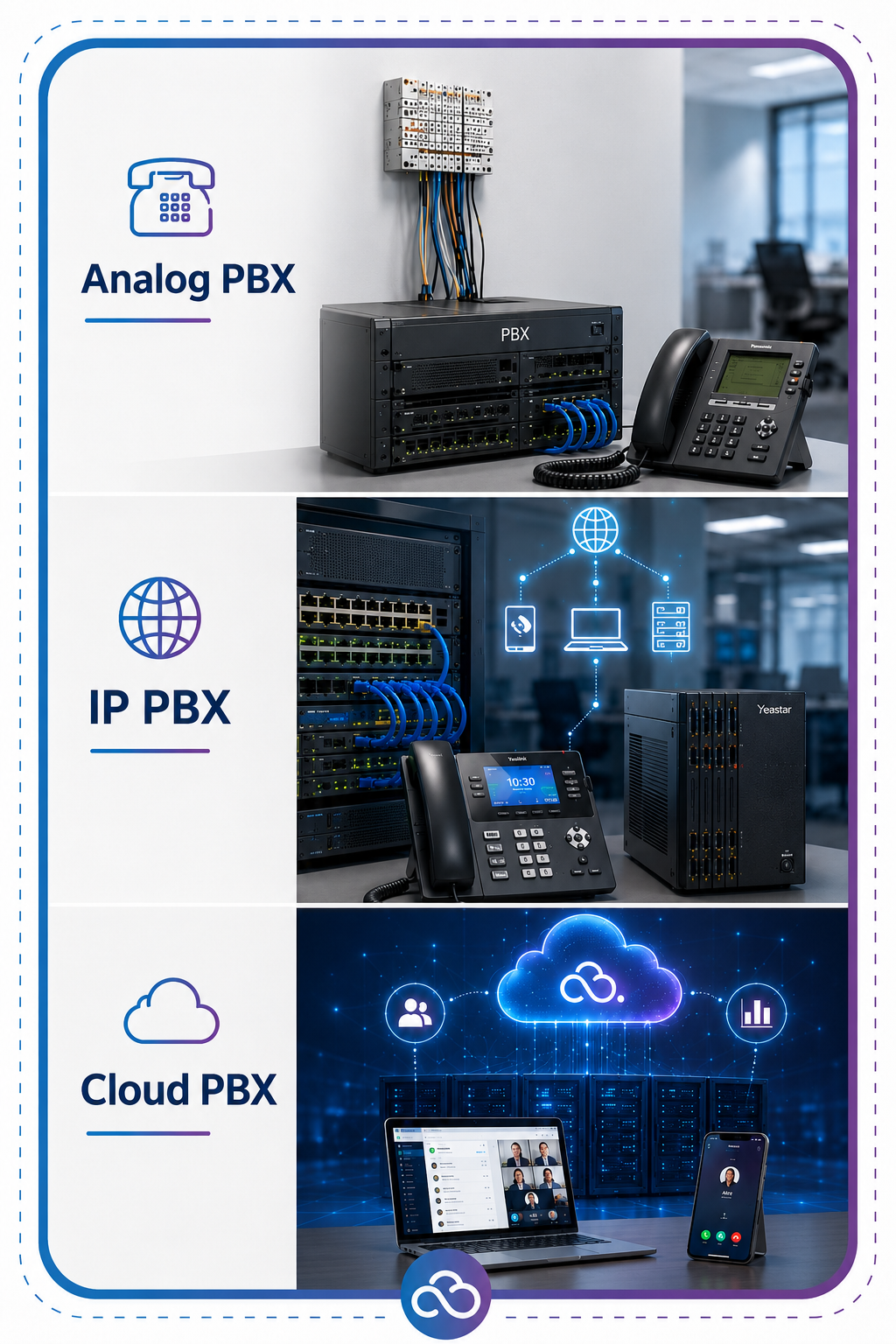
1. Analog PBX
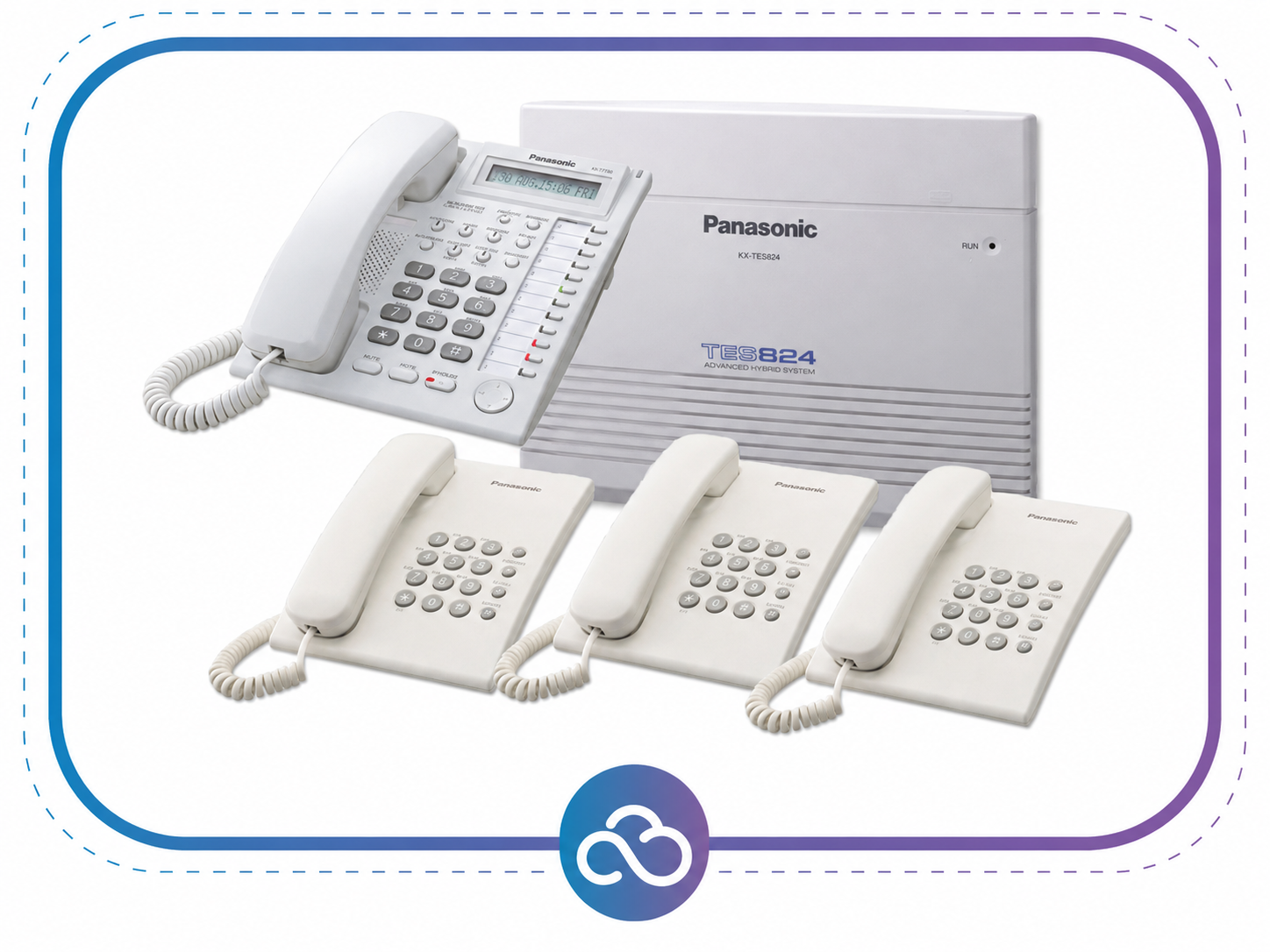
The analog PBX is the traditional, legacy communication system that relies on copper wiring. Although it is stable, it lacks the flexibility and smart features required by modern work environments. It is suitable for micro-sized businesses. The most well-known type of analog PBX is the Panasonic PBX.
2. Internal Network PBX (IP PBX)
Many companies rely on an internal IP PBX to connect departments with one another and facilitate internal communication at no additional cost. It is essential for offices and companies with multiple branches. It offers hundreds of features such as call recording, automated call distribution (ACD), IVR (Interactive Voice Response), call queuing, call transfer, conferencing, and real-time reporting, among others.
3. Cloud PBX
Here is the future — where cloud PBX represents a major leap in the world of communications, with the entire system hosted online. Cloud PBX solutions provide features such as remote work support, call recording, and integration with CRM systems without the need for complex hardware at the company’s premises.
Comparison Between Traditional Panasonic PBX vs. Modern Cloud PBX Solutions
For decades, the Panasonic PBX was the dominant choice for many years, and it indeed delivered stable performance during the era of “copper-based communication.” However, with the accelerating digital transformation, a gap has begun to emerge between what old technology offers and what today’s smart work environment demands.
Why is relying on a Panasonic PBX currently considered a technological risk?
Traditional Panasonic systems rely on analog technology or limited hybrid systems, which places companies in front of several obstacles:
- Scalability: On a Panasonic PBX, adding a new employee requires purchasing hardware expansion cards (hardware) and installing new cabling. In contrast, with a cloud PBX, adding a new user is accomplished with a single click directly from the management dashboard.
- Maintenance Costs and Component Rarity: Because the manufacturer has ceased production of numerous legacy models and redirected its focus toward other business sectors, finding original spare parts or a PBX technician specialized in older models has become both expensive and challenging.
- Workplace Mobility Limitations: Traditional PBX systems confine you within the office walls. In contrast, cloud PBX solutions allow your employees to answer calls through a mobile or laptop application as if they were in the office, something that legacy systems do not provide.
- Lack of Smart Integration: Legacy technology lacks the ability to integrate with Customer Relationship Management (CRM) systems or to automatically extract accurate, recorded analytical reports for cloud-based calls.
Comparison Table: Panasonic PBX vs Cloud PBX
| Comparison Aspect | 📞 Panasonic PBX (Legacy PBX) | ☁️ Telsip Cloud PBX (Cloud PBX) |
|---|---|---|
| Connection Method | ||
| Remote Work | ||
| Initial Cost | ||
| System Updates | ||
| Artificial Intelligence |
The Importance of Hiring an Expert PBX Technician When Installing a PBX for Your Company
The programming and configuration process is not just about connecting wires. Relying on an expert PBX technician ensures you:
- Proper line distribution and interference avoidance.
- Professional IVR (Interactive Voice Response) setup that reflects your company’s front-end interface.
- Securing the system against breaches, especially for internet-dependent systems.
Why choose Telsip PBX service?
At Telsip, we provide comprehensive, end-to-end solutions starting from installing an on-premise PBX system at your workplace through Xontel, or extending to the latest cloud PBX solutions that ensure you can stay connected and respond to your customers from anywhere in the world.
- Continuous technical support and extensive market experience.
- Exceptional scalability and system upgrade flexibility as your company grows.
- Competitive pricing suitable for both startups and large enterprises.
Whether you are looking to upgrade your current system or transition to a cloud communication system or cloud PBX, choosing the right PBX is an investment in your company’s image.
Telsip — an all-in-one cloud communications platform that combines a cloud PBX, a cloud contact center, unified OMNI channels, and a WebRTC-powered softphone, with seamless CRM integration and professional support; it delivers intelligent call management, unified conversations, and real-time reports that enhance your team’s efficiency and your customers’ experience.
Business phone service is an integrated system for managing a company’s internal and external calls. It typically includes features such as call distribution, Interactive Voice Response (IVR), call forwarding, call recording, ring groups, call queues, as well as reporting capabilities and the ability to connect various branches and remote employees.
Analog PBX relies on traditional copper wiring and offers limited features. IP PBX operates within the company premises via an internal network and provides more advanced features. Cloud PBX is hosted entirely by the service provider, allowing it to be managed and accessed from anywhere via the internet.
Despite Panasonic’s historical reputation for reliability, it faces significant technical challenges in the era of digital transformation. If you aim to integrate your communications with a CRM system or require remote work features, traditional systems will hinder your company’s growth compared to cloud solutions that are designed to meet modern business needs.
A traditional Panasonic PBX often relies on physical hardware, expansion cards, and dedicated on-site wiring. In contrast, a Cloud PBX operates over the internet, allowing you to add users, manage the system, and connect branches without the need to install a physical server (PBX unit) inside your office.
A company needs a new PBX when the number of employees or lines increases, when opening new branches, or when it becomes difficult to manage and transfer calls between departments. You may also need one if you want to implement call recording, set up an IVR, or improve the monitoring of your sales and customer service teams.
A Cloud PBX generally does not require a local server or a permanent technician on-site, as the service provider handles hosting, maintenance, and updates. However, you may still need a technician to configure your network and handsets, optimize your router settings, ensure Quality of Service (QoS), and train your staff.
Transitioning to a new communication system is more than just “connecting cables.” Hiring a specialized PBX technician ensures that your IVR is set up professionally, calls are distributed intelligently to maximize sales opportunities, and—most importantly—your network is secured against cyber threats that can affect internet-based systems.
Yes, in many cases we can integrate your existing devices or IP phones with our cloud system. We also provide you with advanced options for a completely new PBX installation that fits your budget and future needs.
