From Multiple Communication Channels to an Integrated Customer Experience Imagine Mohammed... he's had a minor…
The Hidden Cost of Communications Within Companies
The Hidden Cost of Communications Within Companies
Why Doesn't the Phone Bill Reflect the Real Cost?
When companies discuss their communications budget, managers often focus on just one number: the monthly subscription fee or the phone bill. In reality, though, that number represents only a small fraction of the true cost of communications within an organization.
Many companies overlook what could be called the “hidden cost of communications” — the indirect costs that result from poor call management or the lack of accurate operational data.
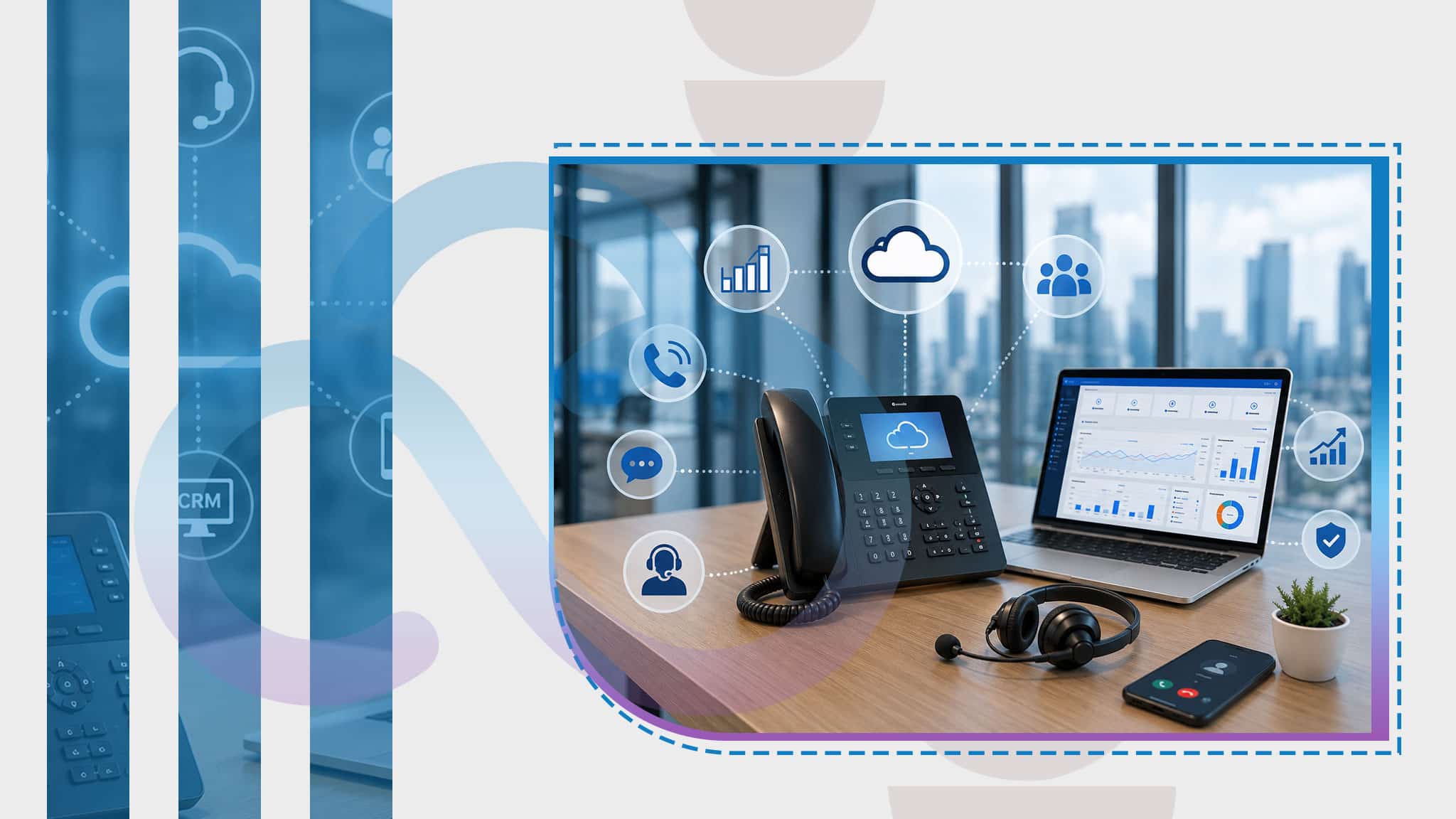
In the modern business world, communications have become part of a company’s digital infrastructure, and with the emergence of Cloud Communications technologies like Cloud PBX and Cloud Telephony, it’s now possible to manage communications more intelligently and transparently. But before discussing solutions, it’s important to understand the core problem first: what is the real cost of communications within an organization?
The Concept of Total Cost of Communication (TCC)
In financial management, there’s a well-known concept called Total Cost of Ownership (TCO) — calculating the full cost of a system, not just its purchase price. The same concept applies to communications within companies, and can be called Total Cost of Communication (TCC).
This concept covers all the costs tied to managing communications within an organization, such as:
- Hardware costs
- Maintenance costs
- Time lost due to poor call management
- Lost customers due to unanswered calls
- Weak sales follow-up
These costs often don’t show up directly in financial reports, but they significantly affect company performance.
Hidden Cost #1: Losing Customers Due to Unanswered Calls
At many companies, there’s no clear visibility into how many calls go unanswered. In traditional systems like classic PBX, accurate reports may not be available to show:
- The number of missed calls
- Wait times
- Why a call was dropped
This means a company could be losing potential customers without even realizing it. By contrast, Cloud PBX and Business VoIP platforms provide accurate reporting on every call, allowing management to analyze the performance of sales and customer service teams.
Hidden Cost #2: Weak Customer Follow-Up
At many organizations, phone calls happen without being logged in any business system. This leads to problems such as:
- Lost customer information
- Calling the same customer repeatedly without knowing their history
- Poor follow-up on sales opportunities
But with Business Communications Platforms, calls can be integrated directly into CRM systems via Telephony API. This lets companies log every call and turn it into analyzable data.
Hidden Cost #3: No Operational Reporting
Managing communications without data is like running a company without a dashboard. At many companies, managers have no way of knowing:
- How many calls the team receives each day
- How long it takes to respond to customers
- Each agent’s performance in the contact center
Contact Center as a Service (CCaaS) and Unified Communications as a Service (UCaaS) platforms provide analytics dashboards that help management monitor performance in real time. This data significantly helps companies improve operational efficiency.
The Evolution of Communication Systems: From Traditional PBX to Cloud PBX
For a long time, companies relied on Private Branch Exchange (PBX) systems running on-site. These systems required internal communication hardware, phone wiring, and regular maintenance.
But as VoIP infrastructure advanced, technologies like SIP Trunking emerged, allowing calls to be made over the internet. This development led to the rise of Hosted PBX and Cloud PBX. In this model, the system runs within Telecom Cloud Infrastructure inside advanced data centers, letting companies manage communications online without needing complex on-site hardware.
The Role of AI in Advancing Contact Centers
One of the most important shifts in the communications sector is the use of AI within contact centers. AI Contact Center technologies let companies analyze calls intelligently, making it possible to:
- Analyze sentiment within calls
- Detect recurring issues
- Improve customer service quality
AI systems can also automatically route calls to the right agent using Smart Call Routing technology, which reduces wait times and increases customer satisfaction.
Benefits of Adopting Cloud Call Center and UCaaS
As digital communications have evolved, integrated platforms have emerged that bring all communication tools together into a single system. The most notable of these are Unified Communications as a Service (UCaaS) and Contact Center as a Service (CCaaS), which offer companies several operational benefits:
Lower operating costs
No need to buy hardware or build complex infrastructure.
Support for remote work
Employees can work from anywhere using WebRTC Communications.
Improved customer experience
Through Omnichannel Customer Engagement, customers can reach the company by phone, message, or chat.
Integration with other systems
Using Telephony API, communications can be connected with CRM, ERP, and e-commerce systems.
Global Trends in the Cloud Communications Market
The Cloud Communications market is growing rapidly worldwide. Reports from research firms like Gartner and MarketsandMarkets indicate that the Unified Communications market will see significant growth in the coming years, driven by several key factors:
- Digital transformation
- The spread of remote work
- Advances in AI
- The growing importance of the customer experience
Sources:
The Future of Digital Communications Within Companies
In the near future, communications will no longer be just a means of contact — they’ll be part of a company’s digital infrastructure. Technologies like Programmable Voice, Real-Time Communications, and WebRTC Communications will let companies embed communications directly into their apps and digital systems. In this way, communications will shift from an operational service into a data platform that helps management make better decisions.
Conclusion
The phone bill doesn’t reflect the real cost of communications within a company. The true cost includes what’s known as Total Cost of Communication (TCC), which covers:
- Lost customers due to unanswered calls
- Poor call follow-up
- A lack of operational data
That’s why modern companies are moving toward adopting technologies like Cloud PBX, Cloud Telephony, UCaaS, and CCaaS — to turn communications from a simple phone service into an operational platform that improves performance and increases revenue.
Telsip — an all-in-one cloud communications platform that combines a cloud PBX, a cloud contact center, unified OMNI channels, and a WebRTC-powered softphone, with seamless CRM integration and professional support; it delivers intelligent call management, unified conversations, and real-time reports that enhance your team’s efficiency and your customers’ experience.
For more information about Telsip products and services, leave your data and one of our specialists will contact you..


Related Posts