From Multiple Communication Channels to an Integrated Customer Experience Imagine Mohammed... he's had a minor…

Call Center Terminology –2
Call Center Terminology–Part 2
“In the previous blog, we covered the first part of the most important call center terms. In this one, we continue by clarifying and explaining the second part.”
Thirdly, terminology related to performance and quality reports:
1. Average Handle Time (AHT):
Is the average time a call center agent takes to handle a single call, from the moment the call is received to the completion of all tasks related to the call. It includes: Time spent talking to the customer + any hold time. AHT is considered a key indicator of both the call center’s operational efficiency and the individual agent’s performance.
2. Abandoned Call:
A call that a customer ends (hangs up) before being answered by an agent, often due to a long wait in the Call Queue. A high rate of abandoned calls is an indication of issues such as slow response times or insufficient staff.
3. Expected Wait Time (EWT):
Expected Wait Time in call centers refers to the estimated amount of time a customer can expect to wait before speaking to a customer service agent, and a high expected wait time level is considered a sign of an issue with the speed of response to customers.
4. Call Escalation:
Call escalation occurs when a customer requests that their call be transferred from a customer service agent to a higher level within the organizational or technical hierarchy,, such as to a supervisor or a specialised department, when the agent is unable to resolve the issue or the issue is complex beyond the agent’s authority, or when the customer requests to speak to a higher level manager.
5. First Call Resolution (FCR):
FCR is a key performance indicator of efficiency, measuring whether the customer’s inquiry is fully resolved by the end of the first call, eliminating the need for follow-up calls.
6. Service Level Agreement (SLA):
SLA is a call center performance metric that defines the percentage of incoming calls that must be answered within a predetermined timeframe. It is a target that a company sets for itself (or an agreement with an external client) on how quickly and efficiently it responds to callers. A common example used by companies is “80/20” which means that 80 % of calls should be answered within 20 seconds. The service level metric is generally used to monitor a customer service department’s compliance with established performance standards.
7. Real-Time Dashboard:
Is a visual dashboard that displays current and up-to-date performance data of the call center in real time. This data is continuously updated, often every few seconds or minutes. Examples of the data it shows: Number of ongoing calls, number of calls in queue, current expected wait time, number of available/busy agents, and missed call rate. The overall purpose is to enable supervisors to make quick decisions and optimise team management during operations.
8. Quality Assurance:
Quality Assurance (QA) is a process for evaluating the performance of call center agents to ensure that they adhere to standards and procedures, and deliver high quality customer service. This process typically involves reviewing customer interactions (recorded calls, chat conversations, emails). The quality review is done by listening to call recordings, evaluating them based on specific evaluation forms, and providing guidance feedback to agents.
9. Key Performance Indicators (KPI):
Measurable metrics used to evaluate the performance of the call center, employees or agents in achieving the company’s strategic and operational goals, using several sub-metrics such as: Average Handling Time (AHT) – First Call Resolution (FCR) – Customer Satisfaction (CSAT) – Abandonment Rate.
Fourthly, terminology related to systems integrated with the Call Center:
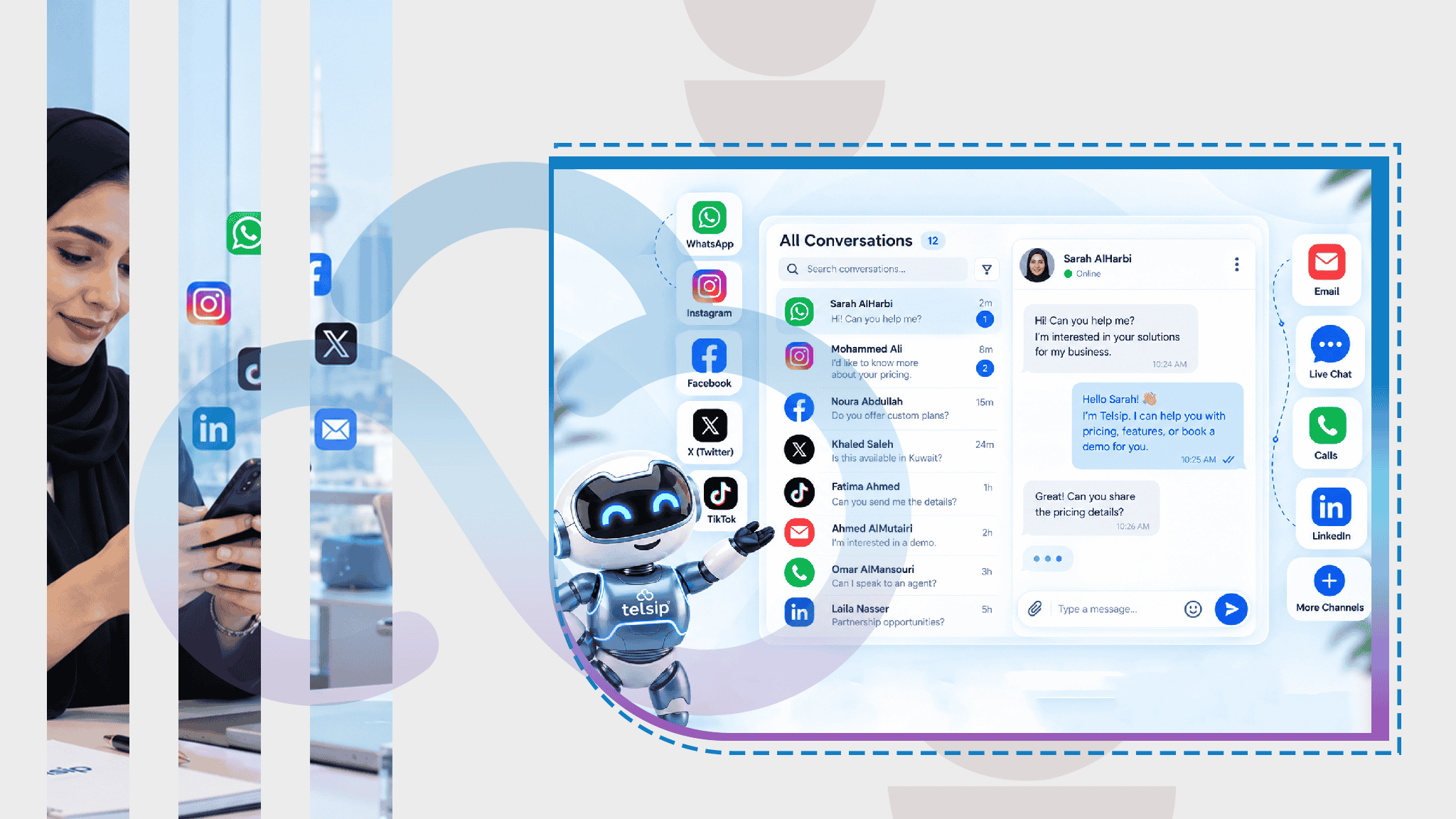
1. Omnichannel communications:
Omnichannel in call centers aims to provide customer service and support through all possible customer communication channels to make it easier for the customer, examples of communication channels:
- Live chat
- Text messaging (SMS)
- Video calls
- Social media platforms
- Other messaging apps like WhatsApp and others

2. Customer Relationship Management (CRM):
The CRM system aims to enhance the customer experience, provide a more personalised service, and maximise the efficiency of the sales and support teams, by enabling quick access to information such as Purchase history, call records, previous orders, and internal notes.
Benefits of Using CRM in the Call Center:
- Quick access to customer data during the call.
- Personalized service based on the customer’s history and preferences.
- Improved follow-up through recording every contact or complaint.
- Performance analysis and identifying sales or improvement opportunities.

3. Automatic Call Distributor (ACD):
It is a system that automatically distributes incoming calls to available agents based on specific criteria such as skills, call priority, or agent availability. The main goal is always to utilise this feature to achieve the fastest possible response and distribute calls load amongst agents fairly.
4. Interactive Voice Response (IVR):
A system that allows callers to interact with an automated voice menu using keypad inputs or voice commands, in order to route them to the appropriate department without human intervention. For example, when you call a company and hear a like: for sales press “1” for technical support press “2” for customer service press “3” – The main goal of IVR is to provide a faster experience for the customer and reduce the workload on agents.

5. Auto Dialer:
Auto Dialer is an automated system that places outbound calls automatically to predefined list of phone numbers on behalf of call center agents. It plays a pre-recorded message to the customer, the main purpose is to increase agents’ efficiency in outbound calls, boost productivity and speed up outbound calling campaigns (such as marketing or sales).
sources 1
Frequently Asked Questions (FAQ)
Key call center terms include average handle time, abandoned calls, expected wait time, call escalation, first call resolution, service level, quality monitoring, and key performance indicators (KPIs). Understanding these terms helps in analyzing call center performance and enhancing the customer experience.
Call center performance is measured through a set of key performance indicators (KPIs), such as average handle time, abandoned call rate, average wait time, first call resolution rate, service level, and customer satisfaction (CSAT). These metrics provide a clear picture of operational efficiency and service quality.
Average Handle Time (AHT) is the average time an agent needs to fully process a customer interaction. It includes talk time, hold time, and the time required to complete after-call work and log notes once the call has ended.
First Call Resolution (FCR) is one of the most critical efficiency metrics; the higher its rate, the lower the operational costs resulting from repeat calls. When a customer’s issue is resolved on the first contact, customer satisfaction (CSAT) improves, brand loyalty increases, and agent pressure is reduced, which in turn raises the overall productivity of call center performance.
Service Level is a metric that measures the percentage of calls answered within a specified time frame. For example, an 80/20 target means the call center aims to answer 80% of calls within 20 seconds. This indicator is used to track response speed and adherence to service goals.
Expected wait time is the duration the system predicts a customer will wait before being answered, while actual wait time is the duration the customer actually waited. Comparing these two metrics helps evaluate the accuracy of the system’s predictions and the efficiency of call distribution.
A real-time dashboard displays current operational data, such as the number of calls in queue, average wait time, agent status, and ongoing or abandoned calls. This data enables supervisors to make quick decisions, such as reallocating agents or intervening when call volume spikes.
Integrating a Customer Relationship Management (CRM) system with the call center allows agents to access customer data, call history, and prior requests during the interaction. This leads to more personalized service, improved follow-ups, reduced time spent searching for information, and systematically organized interaction logging.
Omnichannel communications give customers the freedom to choose their preferred communication channel and enable agents to track all interactions from a single platform. They also help reduce the repetition of information, speed up response times, and deliver a more cohesive and personalized customer experience.
An Interactive Voice Response (IVR) system allows customers to select the desired service or department using phone keypad inputs or voice commands. Once the selection is made, the Automatic Call Distributor (ACD) takes over and routes the call to the most suitable agent or team based on predefined distribution rules.
Telsip — an all-in-one cloud communications platform that combines a cloud PBX, a cloud contact center, unified OMNI channels, and a WebRTC-powered softphone, with seamless CRM integration and professional support; it delivers intelligent call management, unified conversations, and real-time reports that enhance your team’s efficiency and your customers’ experience.
For more information about Telsip products and services, leave your data and one of our specialists will contact you..


Related Posts