From Multiple Communication Channels to an Integrated Customer Experience Imagine Mohammed... he's had a minor…
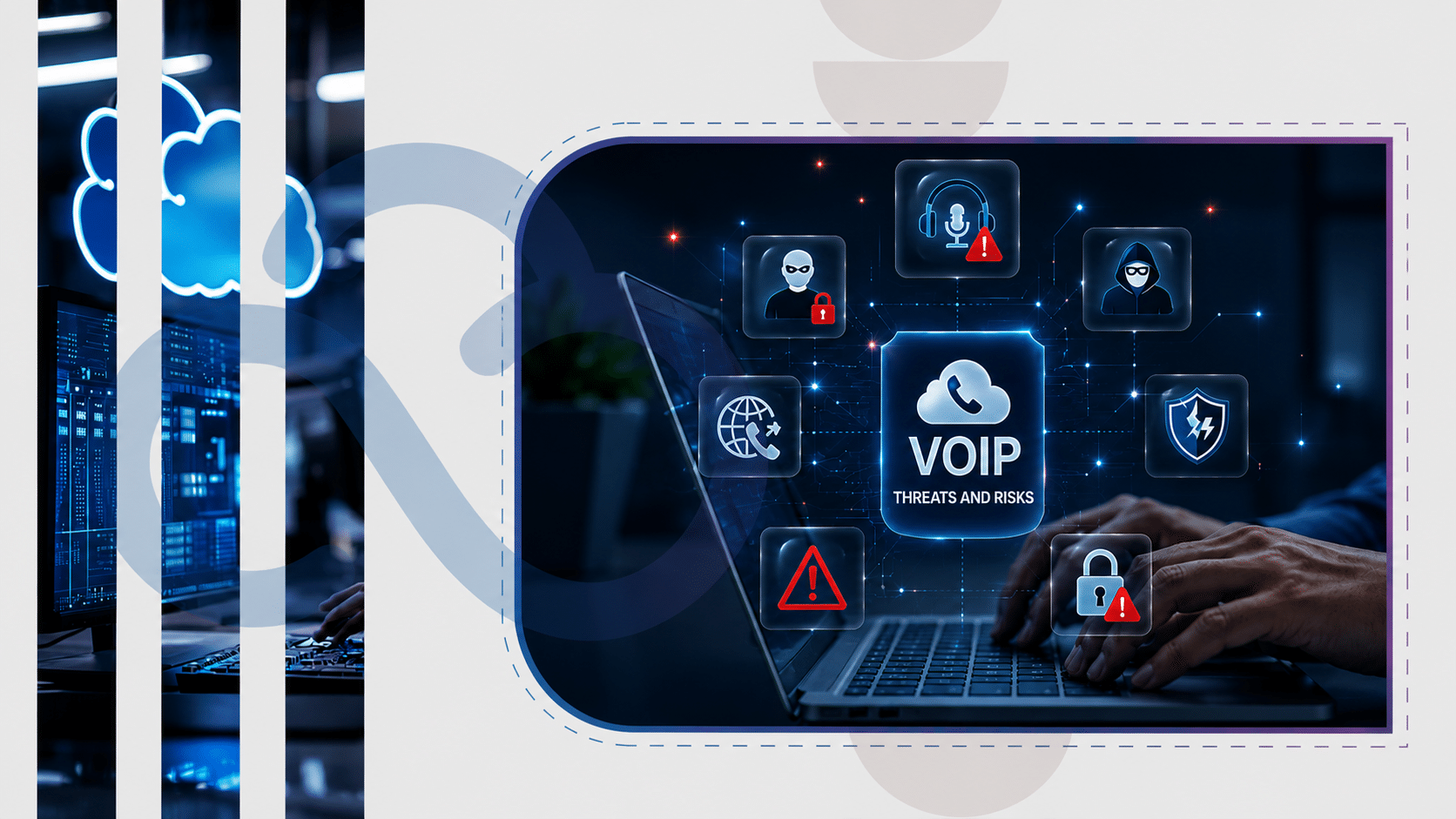
VoIP Security Risks Guide
Threats and risks of network communication systems (VoIP systems) You Need to Be Cautious About– Part 1
Modern VoIP (Voice over Internet Protocol) technology has revolutionised corporate communications systems. It allows phone calls to be made over the Internet and internal networks instead of traditional phone lines. As more companies adopt VoIP technology, it has become essential to secure their communication systems.
In this blog, we will explore common threats to VoIP systems and how to protect against them, in detail.
Why Is the Security of Communication Systems So Important?
As mentioned above, VoIP technology relies heavily on the Internet. This technology offers many advantages to businesses. It is more cost-effective than traditional telephone systems. It also offers additional features such as voicemail-to-email, call routing, video conferencing, advanced call analytics, and more.
However, communication systems, like any websites or applications you use daily, are vulnerable to cyber threats. Calls often contain important and confidential information such as customer data, financial accounts, etc. Without preventive security measures, communication systems can be exposed to attacks, putting customer data at risk of leakage and other problems, including:
- Disruption of company communications.
- Loss of customer trust in the company that has been hacked.
- Damage to the company’s reputation.
- Negative impact on future cooperation with customers or potential partners.
- Worst of all, cyberattacks on communication systems can lead to significant financial losses and even legal fines.
As these risks become more serious and complex, communications security becomes more important.
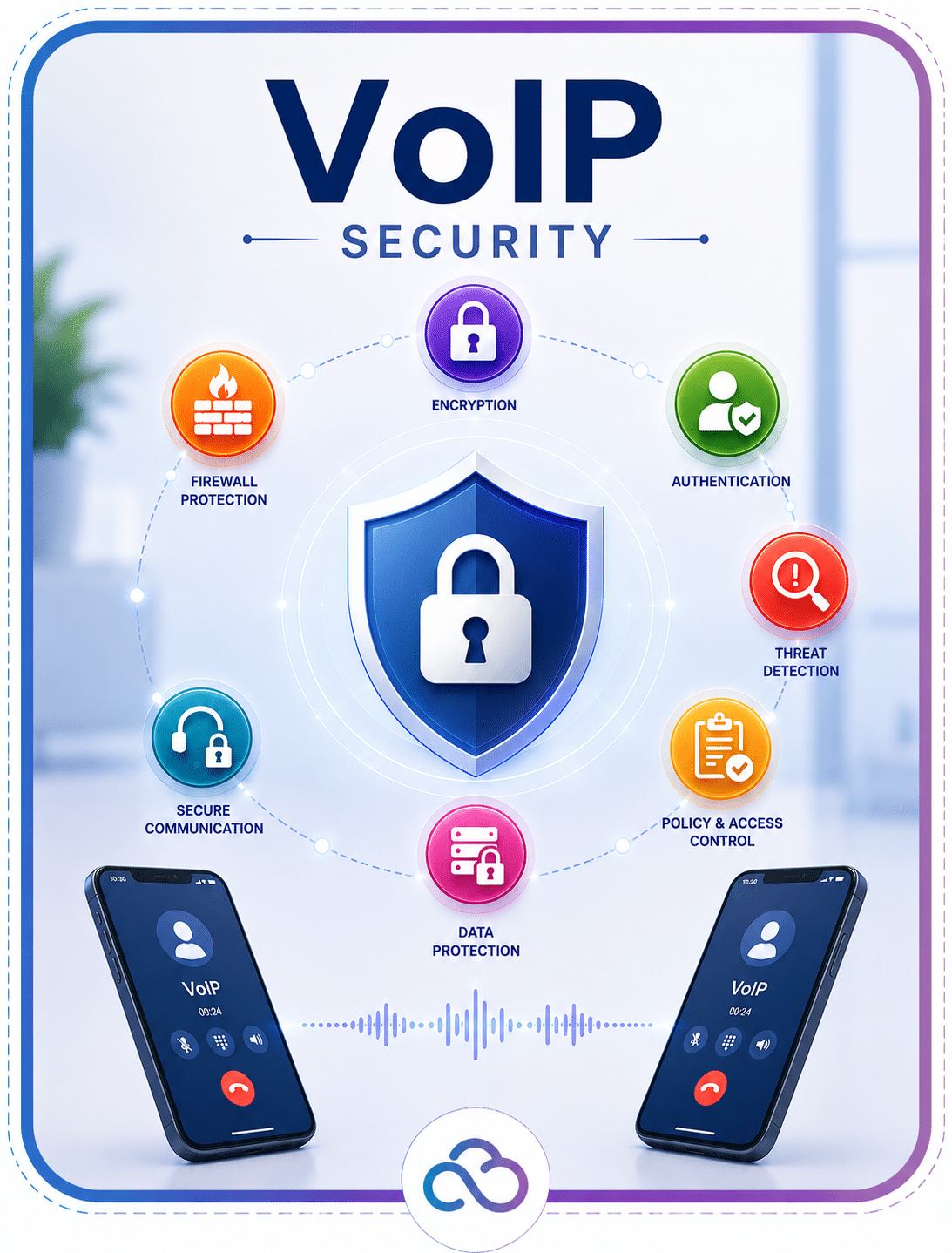
In brief, VoIP communications security refers to the measures a company takes to protect its business information from unauthorized access, interruption, or modification.
These measures include encryption, multi-factor authentication, firewalls, and more.
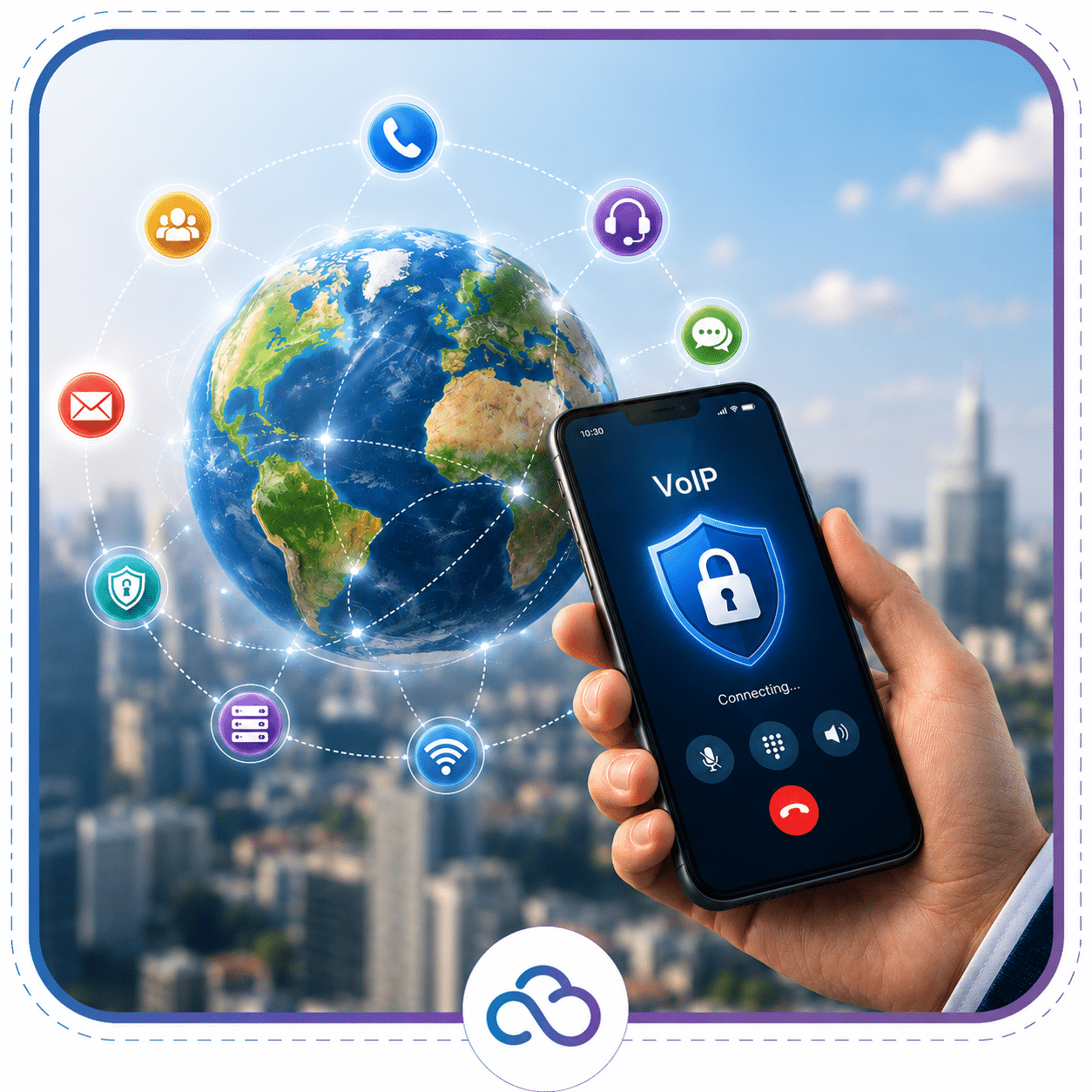
The Future and Security of Network Communication Systems
The global VoIP market reached $29.95 billion in 2024. Forecasts indicate that this number will increase to $63.73 billion by 2031. With the continuous rise in demand for VoIP communication solutions, communication security will receive more attention from companies, making them more aware of the importance of security in light of increasing security threats.
For this reason, trusted network communication service providers are strengthening security measures to protect data privacy and prevent cyber threats.
Firstly: Common Types of VoIP Security Threats
1. Vishing
The term ‘vishing’ refers to voice phishing, which occurs when attackers use phone calls to trick users into revealing sensitive information such as passwords or financial details. They often pretend to be legitimate entities such as banks or technical support.
It is one of the most common scams today, where fraudsters create a sense of urgency, for example by claiming there is an issue with the account, and then ask for the customer’s personal details, passwords or credit card numbers.
Victims may provide this information to scammers in good faith.
2. Toll Fraud
In toll fraud, attackers gain access to your company’s communication system and make long or international calls through the company’s network communication (VoIP) system.
Attackers may exploit weak passwords of some employees or system vulnerabilities. Once they successfully gain access, they can make expensive international calls, resulting in significant financial losses for the company.
3. Reconnaissance (pre-attack information gathering)
This is a term used in cybersecurity that refers to the pre-attack phase of a cyberattack. During this phase, the attacker gathers as much information as possible about the target before launching the actual attack.
The main goal is to build a comprehensive and detailed picture and map of the potential victim. The more accurate the information the attacker collects, the higher the chances of a successful attack.
4. Distributed Denial of Service (DDoS) Attacks
Distributed Denial of Service (DDoS) attacks occur when hackers send thousands or hundreds of thousands of simultaneous requests to computers and VoIP system servers, flooding the system and making it unable to respond to all those requests and making it unavailable to users.
Attackers often use networks of infected computers to launch these attacks, sending huge amounts of data to the targeted system, which can slow down or completely disrupt VoIP service, preventing the company from making or receiving calls during the attack.
5. Spoofing
Call spoofing refers to fraudsters interfering with a call, where they can modify, disrupt or listen in on the call. They can also add noise, distort voices or even change the content of the call.
It is worth noting that call spoofing is difficult to detect, as attackers use advanced techniques such as AI-powered voice synthesis, making it difficult for companies to identify this manipulation.
6. Traffic Interception
Hackers use various tools and techniques to intercept all data paths in the internal network, capturing and analysing data transmitted via the VoIP system.
By exploiting network vulnerabilities and intercepting this data, they can listen in on private conversations and collect users’ sensitive information and passwords.
7. Spam over Internet Telephony (SPIT)
It is the act of sending unwanted or unsolicited calls to users. These calls are often automated and used for voice phishing or advertisements. In some cases, SPIT is designed to trick users into revealing personal or sensitive information.
SPIT is a serious security threat to VoIP systems because it burdens them with unnecessary and annoying calls, which disrupts the system, reduces its efficiency, and wastes company time.
This blog covered the most common VoIP security threats. In our next blog, we’ll dive into the best practices for securing VoIP systems and reducing risk. We encourage you to continue with us as we build a comprehensive understanding of VoIP security.
sources 1
Frequently Asked Questions (FAQ)
The most prominent threats to VoIP systems include vishing (voice phishing), toll fraud, data interception, caller ID spoofing, VoIP spam (SPIT), and distributed denial-of-service (DDoS) attacks. These threats may lead to information leakage, communication disruptions, or increased call costs.
VoIP systems rely on the internet and data networks for call transmission, and therefore may be exposed to certain risks associated with network-connected systems. Attackers can exploit weak passwords, insecure network configurations, or outdated systems to gain access to the communications system or intercept its data.
Vishing, or voice phishing, is a technique in which a scammer uses phone calls to deceive the victim into revealing sensitive information, such as passwords or account and banking card details. The attacker often impersonates a bank, an official entity, or a technical support agent to gain the victim’s trust.
Toll fraud occurs when an attacker manages to use the company’s communications system to make unauthorized calls, particularly international or premium-rate calls. This can lead to substantial bills and financial losses for the company.
Toll fraud may occur as a result of a user account being compromised, weak password usage, or the exploitation of an insecure configuration in the VoIP system. Once access is gained, the attacker can make calls at the company’s expense or redirect calls to premium-rate numbers.
Data interception can lead to the leakage of customer and employee conversations, the exposure of business or financial information, and the theft of system login credentials. This can result in legal and financial damages, along with a loss of customer trust and harm to the company’s reputation.
Distributed denial-of-service (DDoS) attacks occur when an attacker sends a massive number of requests or data packets to VoIP system servers simultaneously. This consumes system resources and slows down or disrupts service, preventing the company from making or receiving calls.
Telsip — an all-in-one cloud communications platform that combines a cloud PBX, a cloud contact center, unified OMNI channels, and a WebRTC-powered softphone, with seamless CRM integration and professional support; it delivers intelligent call management, unified conversations, and real-time reports that enhance your team’s efficiency and your customers’ experience.
For more information about Telsip products and services, leave your data and one of our specialists will contact you..


Related Posts